Hawke’s Bay District Health Board member, Dr David Barry is Landmarks History Group’s guest speaker for November 2010 on the history of how one regional hospital was formed in Hawke’s Bay. The process which resulted in the regional hospital for Hawke’s Bay had many influences on the decision. A mixture of parochialism, civic pride, Hastings’ growth in population, central and local government influence and medical advances in intensive care, all make the ingredients for a fascinating talk by Dr Barry.
Dr Barry is well-qualified to talk on this subject having been first employed by the hospital as senior pediatrician in 1972, and was chairman of Hastings Memorial Hospital medical staff at the time of the initial moves toward establishing a single hospital
Monday, 1 November 2010


Sunday, 17 October 2010
The Kirk, the Laird and the Lady Principal – an account of the founding of Iona College Jo McGlashan
Iona College was the dream of three visionary yet practical people:
Mr Hugh Campbell of Breadalbane, Havelock North, who offered the Presbyterian Church of New Zealand eight acres of land, initially for the establishment of a Deaconess College.
Reverend Alexander Whyte, Minister of St Columba’s Church, Havelock North, 1898-1910, who saw the need for a Presbyterian Girls’ School and petitioned the Presbyterian Church to establish one.
Miss Isabel Fraser, Principal of Wanganui Girls’ College, 1893 — 1910, whose dreams were for a Christian education for young women and who, in 1909, offered her services to the Presbyterian Church should a girls’ boarding school be established. Incidentally, it was Miss Fraser who introduced the kiwifruit to New Zealand.
These visions coalesced when the 1911 General Assembly of the Presbyterian Church set up a committee to ‘investigate the support for the establishment of a girls’ boarding school’. During the next year a further four acres of land were donated by Mr Mason Chambers; Miss Fraser travelled to Britain where she visited schools seeking ideas and models, and funds were sought throughout the North Island in order to meet the conditions of Mr Campbell’s gift.
At the November 1912 meeting of the Presbyterian Church committee, several important decisions were made: the gifts of land from Messers Campbell and Chambers were accepted and a boarding school for girls was to be established; Miss Isabel Fraser was offered the position of Headmistress — she accepted and, as well, offered her services free for a period of five years!
The committee adopted several of Miss Fraser’s suggestions:
The name of the school was to be Iona College, Iona being the first place in Scotland where Saint Columba had preached Christianity.
The College crest was to be the Celtic cross.
The College’s motto was to be ‘Love, Joy, Peace’ — gifts of the Holy Spirit as outlined by the apostle Paul in Galatians 5.22.
Architects Rush and James were asked to submit a plan for the school taking Miss Fraser’s ideas into account. The committee itself was enlarged and an Executive Committee was appointed.
Miss Fraser again travelled to Britain seeking equipment and staff. She was overseas when on May 14, 1913, the College Foundation Stone was laid by Mr Hugh Campbell at a gathering attended by over 1,000 people. The Foundation Plaque sits in the main building outside the Principal’s office.
Opened in 1914, Iona College is the oldest Presbyterian School in New Zealand. It was established as a girls’ boarding school built on land donated by Mr Hugh Campbell.
The Prime Minister, the Right Honourable W F Massey, opened Iona College on February 14, 1914.
Iona opened with a roll of 48 pupils who were accommodated in buildings that were habitable but unfinished.
In its infancy, Iona developed very quickly and prospered under the leadership of Miss Isabel Fraser, the founding headmistress, who offered her services free for the first five years. During its early years, Iona College developed at an unforeseen pace. In 1916, the staff cottages were built and the swimming pool was opened. In 1917, St Oran’s was built as a separate hospital but, upon completion, was used for boarding accommodation such was the demand for places. By 1918 there were 125 boarders.
Miss Fraser retired in 1921. Her name lives on in one of the school’s four Houses and her generative wish for the school is contained in these words:
"May Iona do its share in furnishing our beloved land with women whose bodies are free with the freedom of health, whose minds are free from all littleness, and whose souls are free with the fruits of the spirit against which there is no law."
Miss Fraser was succeeded by Miss J R Barr, from New Plymouth Girls’ High School, who convinced the College Council that Iona should become a registered secondary school. This became possible after the conversion of a classroom into a science laboratory.
Despite the manse upbringing and excellent academic record of Miss Barr’s successor, Miss Ann Drennan, her term as Headmistress was short and, at the end of 1924, Miss Irene Stollery was appointed as acting Principal and then Principal in 1926.
1924 saw the College near bankruptcy and facing a diminishing roll. Those who worked to keep the Founders’ visions alive included Mr Archibald McLean and Mr J B Campbell (son of Hugh) who became Chairman of the Council in 1931. This period was when Commercial and Primary Departments were added. The other major event which happened in this period was the Napier earthquake.
EarthquakeIona’s buildings were severely affected by the February 1931 earthquake and the College had to be closed for a year while refinancing and rebuilding took place. The opening roll in 1932 was 27 boarders and nine day pupils. In 1927, Miss Christina McNeil joined the staff as a teacher of French. In 1936, she was appointed as Headmistress and Iona was to become her life for the next three decades.
The war years saw Iona standing fast in the face of even more adversity. Girls received certificates rather than books for prizes and the money saved was donated to a welfare fund.
The highlight of this period was the opening of St Martin’s chapel in 1958. It was the fulfilment of dreams, visions and 12 years of fundraising.
For Miss McNeil it was the highlight of her days at Iona. Iona was complete with “a place to work and a shrine in which to worship.”
Mr Hugh Campbell of Breadalbane, Havelock North, who offered the Presbyterian Church of New Zealand eight acres of land, initially for the establishment of a Deaconess College.
Reverend Alexander Whyte, Minister of St Columba’s Church, Havelock North, 1898-1910, who saw the need for a Presbyterian Girls’ School and petitioned the Presbyterian Church to establish one.
Miss Isabel Fraser, Principal of Wanganui Girls’ College, 1893 — 1910, whose dreams were for a Christian education for young women and who, in 1909, offered her services to the Presbyterian Church should a girls’ boarding school be established. Incidentally, it was Miss Fraser who introduced the kiwifruit to New Zealand.
These visions coalesced when the 1911 General Assembly of the Presbyterian Church set up a committee to ‘investigate the support for the establishment of a girls’ boarding school’. During the next year a further four acres of land were donated by Mr Mason Chambers; Miss Fraser travelled to Britain where she visited schools seeking ideas and models, and funds were sought throughout the North Island in order to meet the conditions of Mr Campbell’s gift.
At the November 1912 meeting of the Presbyterian Church committee, several important decisions were made: the gifts of land from Messers Campbell and Chambers were accepted and a boarding school for girls was to be established; Miss Isabel Fraser was offered the position of Headmistress — she accepted and, as well, offered her services free for a period of five years!
The committee adopted several of Miss Fraser’s suggestions:
The name of the school was to be Iona College, Iona being the first place in Scotland where Saint Columba had preached Christianity.
The College crest was to be the Celtic cross.
The College’s motto was to be ‘Love, Joy, Peace’ — gifts of the Holy Spirit as outlined by the apostle Paul in Galatians 5.22.
Architects Rush and James were asked to submit a plan for the school taking Miss Fraser’s ideas into account. The committee itself was enlarged and an Executive Committee was appointed.
Miss Fraser again travelled to Britain seeking equipment and staff. She was overseas when on May 14, 1913, the College Foundation Stone was laid by Mr Hugh Campbell at a gathering attended by over 1,000 people. The Foundation Plaque sits in the main building outside the Principal’s office.
Opened in 1914, Iona College is the oldest Presbyterian School in New Zealand. It was established as a girls’ boarding school built on land donated by Mr Hugh Campbell.
The Prime Minister, the Right Honourable W F Massey, opened Iona College on February 14, 1914.
Iona opened with a roll of 48 pupils who were accommodated in buildings that were habitable but unfinished.
In its infancy, Iona developed very quickly and prospered under the leadership of Miss Isabel Fraser, the founding headmistress, who offered her services free for the first five years. During its early years, Iona College developed at an unforeseen pace. In 1916, the staff cottages were built and the swimming pool was opened. In 1917, St Oran’s was built as a separate hospital but, upon completion, was used for boarding accommodation such was the demand for places. By 1918 there were 125 boarders.
Miss Fraser retired in 1921. Her name lives on in one of the school’s four Houses and her generative wish for the school is contained in these words:
"May Iona do its share in furnishing our beloved land with women whose bodies are free with the freedom of health, whose minds are free from all littleness, and whose souls are free with the fruits of the spirit against which there is no law."
Miss Fraser was succeeded by Miss J R Barr, from New Plymouth Girls’ High School, who convinced the College Council that Iona should become a registered secondary school. This became possible after the conversion of a classroom into a science laboratory.
Despite the manse upbringing and excellent academic record of Miss Barr’s successor, Miss Ann Drennan, her term as Headmistress was short and, at the end of 1924, Miss Irene Stollery was appointed as acting Principal and then Principal in 1926.
1924 saw the College near bankruptcy and facing a diminishing roll. Those who worked to keep the Founders’ visions alive included Mr Archibald McLean and Mr J B Campbell (son of Hugh) who became Chairman of the Council in 1931. This period was when Commercial and Primary Departments were added. The other major event which happened in this period was the Napier earthquake.
EarthquakeIona’s buildings were severely affected by the February 1931 earthquake and the College had to be closed for a year while refinancing and rebuilding took place. The opening roll in 1932 was 27 boarders and nine day pupils. In 1927, Miss Christina McNeil joined the staff as a teacher of French. In 1936, she was appointed as Headmistress and Iona was to become her life for the next three decades.
The war years saw Iona standing fast in the face of even more adversity. Girls received certificates rather than books for prizes and the money saved was donated to a welfare fund.
The highlight of this period was the opening of St Martin’s chapel in 1958. It was the fulfilment of dreams, visions and 12 years of fundraising.
For Miss McNeil it was the highlight of her days at Iona. Iona was complete with “a place to work and a shrine in which to worship.”
Wednesday, 6 October 2010
The Kirk, the Laird and the Lady Principal – an account of the founding of Iona College Jo McGlashan
The Kirk, the Laird and the Lady Principal – an account of the founding of Iona College Jo McGlashan, an old-girl of Iona College, and a past chaplain, is the Landmarks History Group speaker for October where she will talk on the founding of Iona College. One person that will be mentioned is founding Principal Miss Fraser, an interesting and farsighted lady who is credited with bringing the first Chinese Gooseberry (now Kiwi Fruit) seeds to New Zealand. As usual the talk will take place at the Hastings Public Library, Warren Street, on Tuesday 12 October from 5.30pm until 6.30pm. Gold coin donation upon entry.
Tuesday, 14 September 2010
Blossom Queen, A festival And A Riot : Helena La Hood (nee Hannah)


Cynthia Bowers gave a brief history of how the blossom festival started.
Napier in early 1920 had their 30 thousand club with Mardi gras and Carnival Queen and shopping extravaganzas, promoting Napier.
After the 1931 earthquake they took the lead role to Napier's redevelopement.
They help establish the sound shell and promenade, and helped retaillers get back on their feet.
Hastings decided to have a carnival of their own. In 1922 the first Hastings carnival was held, wooden arches were erected across the main street, they had late night shopping, best shop display and a carnival parade with model T's and bicycles.
In 1923 HWC Baird decided that they should hold carnival to celebrate 50 years of the establishment of Hastings.
In 1935 a "progress League" was formed to further the progress of Hastings. help the economy and beautify the district.
In 1937 a carnival was held to celebrate Hastings becoming a borrough as well as King George VI coronation. A ball was held as well as a carnival.
In 1950 Hastings reached a population of 20,000 and was proclaimed a city
City status was bestowed on Hastings in the March 1950 this quote was in the HB Herald Tribune " Hastings, yesterday a swamp today a borough, tomorrow a city" as part of the celebrations of Hastings becoming a borough.
In the earlier half 1950 Harry Poppelwell said Hastings was living snuggly on its laurels do very little to move ahead. He formed a group to see what they could do to get the community involved and progress Hastings as a city. In May 1950 Greater Hastings Incorporated was formed. 100 citzens signed as subscribers and paid 5 pounds as a subscription.
The first event the Greaters Hastings Incorporate dorganised was the Blossom festival. This was supported by the Fruitgrowers Association, the Hastings City Council and also by the Retaillers The first Blossom festival was held in 1950. The shops were decorated and there were 41 floats in the parade as well as bands and walkers. Some retailers used the floats as forms of advertising new products or in the case of Bailey's Motors the newest model car out.
The next event they organised was the Easter Highland Games. The first Easter Highland games was held Easter 1951 at Nelson Park. Nelson park only had a grass track then. The Highland games consisted of athletics, woodchopping, show jumping, Archery. It became an annual event and it attracted top class athletes over the years including Peter Snell, Murray Halberg and Precious McKenzie.
The 3rd event the Greater Hastings Incorporated organised was to make a fantasy garden and park on part of windsor park. This was the foundation of Fantasyland. It become a huge success.
The Blossom parades got bigger and better each year. In 1952 there were 45 floats and the standard of floats improved with lots more decoration. In 1953 there were 47 floats 17,000 people and the standard improve yeat again more creative and elaborate floats less advertising and more blossoms.
In 1954 there 55 floats including floats from Napier, and there was in excess of 20,ooo people. Citzens were coming from Napier and districts.
In 1955 there were 69 vehicle driven floats as well and hand pushed floats and walkers and bands. 600 people came from Wellington by train and there was between 35,00 and 40,000 people there. The strees were lined the whole way round the parade course.
1956 there were two parade one on the 8th September and one the following Saturday the 15th September. The 15th was the main blossom parade and there were 2 trains from Wellington, one from Gisborne and busses from Napier and surrounds. In excess of 50,000 people turned out to watch the parade.
In 1957 the idea of Blossom Queen was introduced. The first Blossom Queen was Fiona MacDonald. The Parade now started at Queen Square went via main street to Stortford Lodge, back down St Aubyn Street to finish at Windsor Park.
The 1958 Blossom Queen was Deidre French.
In 1959 the Blossom Arches were designed and erected in the main street.
The parade was enormous retaillers participated with Shop windows full on blossom displays and catalogue was delivered to every household with a mystery number which you had to find your number in the window display to claim your prize. They had "The Best dressed window "and "The best dressed women" competitions. The parade of floats went for 1 mile long and Napier City Council had a float in the parade too. There was 100 floats as well as pipe band, highland pipes and walkers.
1960 parade became known as the "Blossom Festival Riot" as it was delayed and half canceleld beacuse of the weather. Helena La Hood was the blossom Queen.
Helena will talk more on this and what it was like to be a blossom queen.
1972 was the last blossom parade held in hastings until 1990 when it was re established by Mayor Jeremy Dwyer and David Fine who starte the new Blossom festival we have today.
James Morgan talked about "Hastings Blossom Festival ‘riot’, 1960"
 The Hastings Blossom Festival of 1960 became famous for its so-called ‘riot’. The float parade had been cancelled because of wet weather. This, combined with an influx of young people in the city centre, overcrowding in hotels and overbearing crowd-control tactics (like the use of fire-hoses) created a situation where fights readily broke out. Moral panic in the wake of this incident inflated it in the popular imagination to a full-scale riot instigated by rebellious young people. In reality only a small number of people were actually fighting. Twelve were charged, and only with minor offences related to disorderly behaviour.
However the Blossom parade of 1960 goes down in history as the year of the “Blossom Riot”. Because rain delayed the parade many visitors sought shelter in one of the 5 or 6 hotels in the main street and a brawl that started in the Albert Hotel, on the corner of Heretaunga Street and Karamu Road and spilled out into the intersection. Police were called in and after a police car was damaged the Fire Brigade were called and on arrival started hosing everyone in sight. This eventually had the desired affect and things quietly returned to normal. This came to be known as the “Battle of Hastings” or in some cases the “Second Battle of Hastings
 Helena La Hood (nee Hannah) Blossom Queen 1960 talks about 1960 Crowning and what its like to be a Queen.
Napier in early 1920 had their 30 thousand club with Mardi gras and Carnival Queen and shopping extravaganzas, promoting Napier.
After the 1931 earthquake they took the lead role to Napier's redevelopement.
They help establish the sound shell and promenade, and helped retaillers get back on their feet.
Hastings decided to have a carnival of their own. In 1922 the first Hastings carnival was held, wooden arches were erected across the main street, they had late night shopping, best shop display and a carnival parade with model T's and bicycles.
In 1923 HWC Baird decided that they should hold carnival to celebrate 50 years of the establishment of Hastings.
In 1935 a "progress League" was formed to further the progress of Hastings. help the economy and beautify the district.
In 1937 a carnival was held to celebrate Hastings becoming a borrough as well as King George VI coronation. A ball was held as well as a carnival.
In 1950 Hastings reached a population of 20,000 and was proclaimed a city
City status was bestowed on Hastings in the March 1950 this quote was in the HB Herald Tribune " Hastings, yesterday a swamp today a borough, tomorrow a city" as part of the celebrations of Hastings becoming a borough.
In the earlier half 1950 Harry Poppelwell said Hastings was living snuggly on its laurels do very little to move ahead. He formed a group to see what they could do to get the community involved and progress Hastings as a city. In May 1950 Greater Hastings Incorporated was formed. 100 citzens signed as subscribers and paid 5 pounds as a subscription.
The first event the Greaters Hastings Incorporate dorganised was the Blossom festival. This was supported by the Fruitgrowers Association, the Hastings City Council and also by the Retaillers The first Blossom festival was held in 1950. The shops were decorated and there were 41 floats in the parade as well as bands and walkers. Some retailers used the floats as forms of advertising new products or in the case of Bailey's Motors the newest model car out.
The next event they organised was the Easter Highland Games. The first Easter Highland games was held Easter 1951 at Nelson Park. Nelson park only had a grass track then. The Highland games consisted of athletics, woodchopping, show jumping, Archery. It became an annual event and it attracted top class athletes over the years including Peter Snell, Murray Halberg and Precious McKenzie.
The 3rd event the Greater Hastings Incorporated organised was to make a fantasy garden and park on part of windsor park. This was the foundation of Fantasyland. It become a huge success.
The Blossom parades got bigger and better each year. In 1952 there were 45 floats and the standard of floats improved with lots more decoration. In 1953 there were 47 floats 17,000 people and the standard improve yeat again more creative and elaborate floats less advertising and more blossoms.
In 1954 there 55 floats including floats from Napier, and there was in excess of 20,ooo people. Citzens were coming from Napier and districts.
In 1955 there were 69 vehicle driven floats as well and hand pushed floats and walkers and bands. 600 people came from Wellington by train and there was between 35,00 and 40,000 people there. The strees were lined the whole way round the parade course.
1956 there were two parade one on the 8th September and one the following Saturday the 15th September. The 15th was the main blossom parade and there were 2 trains from Wellington, one from Gisborne and busses from Napier and surrounds. In excess of 50,000 people turned out to watch the parade.
In 1957 the idea of Blossom Queen was introduced. The first Blossom Queen was Fiona MacDonald. The Parade now started at Queen Square went via main street to Stortford Lodge, back down St Aubyn Street to finish at Windsor Park.
The 1958 Blossom Queen was Deidre French.
In 1959 the Blossom Arches were designed and erected in the main street.
The parade was enormous retaillers participated with Shop windows full on blossom displays and catalogue was delivered to every household with a mystery number which you had to find your number in the window display to claim your prize. They had "The Best dressed window "and "The best dressed women" competitions. The parade of floats went for 1 mile long and Napier City Council had a float in the parade too. There was 100 floats as well as pipe band, highland pipes and walkers.
1960 parade became known as the "Blossom Festival Riot" as it was delayed and half canceleld beacuse of the weather. Helena La Hood was the blossom Queen.
Helena will talk more on this and what it was like to be a blossom queen.
1972 was the last blossom parade held in hastings until 1990 when it was re established by Mayor Jeremy Dwyer and David Fine who starte the new Blossom festival we have today.
James Morgan talked about "Hastings Blossom Festival ‘riot’, 1960"
The Hastings Blossom Festival of 1960 became famous for its so-called ‘riot’. The float parade had been cancelled because of wet weather. This, combined with an influx of young people in the city centre, overcrowding in hotels and overbearing crowd-control tactics (like the use of fire-hoses) created a situation where fights readily broke out. Moral panic in the wake of this incident inflated it in the popular imagination to a full-scale riot instigated by rebellious young people. In reality only a small number of people were actually fighting. Twelve were charged, and only with minor offences related to disorderly behaviour.However the Blossom parade of 1960 goes down in history as the year of the “Blossom Riot”. Because rain delayed the parade many visitors sought shelter in one of the 5 or 6 hotels in the main street and a brawl that started in the Albert Hotel, on the corner of Heretaunga Street and Karamu Road and spilled out into the intersection. Police were called in and after a police car was damaged the Fire Brigade were called and on arrival started hosing everyone in sight. This eventually had the desired affect and things quietly returned to normal. This came to be known as the “Battle of Hastings” or in some cases the “Second Battle of Hastings
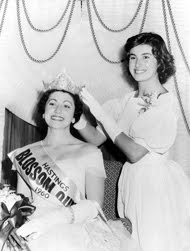 Helena La Hood (nee Hannah) Blossom Queen 1960 talks about 1960 Crowning and what its like to be a Queen.
Hastings' Blossom Festival was first held in 1950 and was the creation of Greater Hastings (note the provocative title), an organisation established to provide an Easter attraction (The Highland Games) as "there was nothing to keep people in Hastings, and nothing to attract visitors to Hastings".The Blossom Queen contest was added in 1957. At the height of the Blossom Festivals in the 1950s, an estimated 50,000 people crammed the streets of Hastings to view the floats, decorated with paper crepe blossoms.The rules for contestants entering the 1960 Blossom Queen Contest stated (among other things): they had to be aged between 18 and 28; unmarried; and possess: poise, personality, charm, beauty of face and figure, education, voice quality, speaking ability and be in good health.No swimsuit parade would occur: "This is not a bathing beauty contest - but a blossom festival quest."The winner would receive a wardrobe of clothes valued at £100 and go on a free, two week trip to Surfers Paradise. Greater Hastings would provide a suitable chaperone for the trip.Helena La Hood (nee Hannah) was visiting relatives in Australia when she received a telegram from her father Paul, saying the Hastings Orphans Club had nominated her as a Blossom Queen candidate.
After arriving back from her holiday, Helena had just two days to prepare for the first round of the competition.Three Blossom Queen Concerts were held at the Hastings Municipal Theatre (now Hawke's Bay Opera House), until the judges selected 12 girls out of 23 contestants to advance to the coronation concert on September 1. The first concert night contained a quiz, and Helena was asked: "What are the three independent schools in Havelock North? What are the four great powers of the world? What impressions of New Zealand would you give if you went to Australia? If you won a great deal of money, what would you do with it?"There was much excitement for her when she was selected in the final 12 girls. Judge Rolf Keys said the winner should "have the figure of Marilyn Monroe, beauty of Grace Kelly and the charm of a member of the royal family". Famed quizmaster Selwyn Toogood would do his Magic Carpet quiz show at the coronation, which would be broadcast on radio throughout New Zealand - as well as announcing the winner of the Blossom Queen contest at 10pm. Helena's parents thought they would make her nervous at the contest, so they listened at home.She won a vacuum cleaner at the Magic Carpet show, and a washing machine on Saturday night's It's in the Bag show with Toogood, but laughs as she remembers she never received the prizes.It came as a shock to Helena when her name was called out as winner, and was crowned by Miss Paradise, Jean Clark from Surfers Paradise, Queensland.Helena had made plans to be fitted for a bridesmaid's dress at the weekend, never thinking she had a chance to win. Despite no sleep due to the excitement of being crowned Blossom Queen, she turned up to work the next day at the Loan and Mercantile Agency. Her manager told her not to worry about work that morning, and sent her home. Many public appearances followed her win as Blossom Queen, including opening Napier's new Odeon Picture Theatre that year. She also went for a ride in a glider, rode go-carts, and handed out prizes at a boxing tournament. She visited schools and was promoting Hastings. Miss Paradise Jean Clark was a popular visitor to Hastings, becoming an instant celebrity, and was paraded from Stortford Lodge down Heretaunga St with a traffic officer motorbike escort the day before the Blossom Festival. Thousands of people lined the streets to catch a glimpse of her. As a Seventh Day Adventist, Jean declined to take part in the Saturday Blossom Parade.When Jean left Hastings she wrote a letter of thanks to everyone, and said "she would not like to forget the Maori people". Jean was no doubt referring to young Ted Bennett, the handsome singer of Teddy and the Bears, who she met at a Blossom Queen Concert. Jean and Ted kept in contact, and later married in 1963. Tragedy later struck the marriage with their son Stephen, being in a coma for three years as a result of a car crash, while Jean herself was killed in a car accident in Newcastle in August 1985 - while her son was still in the coma.Helena left for her trip to Australia - with no chaperone - in July 1961, with a yellow orchid corsage presented by Greater Hastings, which had to disposed of before landing in Australia due to the regulations.Little did the army of press representatives that met her at the airport know that between her hair and hat was a yellow orchid corsage. While in Queensland, she met the mayor of Surfers' Paradise, and had morning tea with the Minister of Tourism. The trip was a fitting end to her reign, in which a lot was expected of her. Her last duty was to crown the next Blossom Queen for 1961.
After arriving back from her holiday, Helena had just two days to prepare for the first round of the competition.Three Blossom Queen Concerts were held at the Hastings Municipal Theatre (now Hawke's Bay Opera House), until the judges selected 12 girls out of 23 contestants to advance to the coronation concert on September 1. The first concert night contained a quiz, and Helena was asked: "What are the three independent schools in Havelock North? What are the four great powers of the world? What impressions of New Zealand would you give if you went to Australia? If you won a great deal of money, what would you do with it?"There was much excitement for her when she was selected in the final 12 girls. Judge Rolf Keys said the winner should "have the figure of Marilyn Monroe, beauty of Grace Kelly and the charm of a member of the royal family". Famed quizmaster Selwyn Toogood would do his Magic Carpet quiz show at the coronation, which would be broadcast on radio throughout New Zealand - as well as announcing the winner of the Blossom Queen contest at 10pm. Helena's parents thought they would make her nervous at the contest, so they listened at home.She won a vacuum cleaner at the Magic Carpet show, and a washing machine on Saturday night's It's in the Bag show with Toogood, but laughs as she remembers she never received the prizes.It came as a shock to Helena when her name was called out as winner, and was crowned by Miss Paradise, Jean Clark from Surfers Paradise, Queensland.Helena had made plans to be fitted for a bridesmaid's dress at the weekend, never thinking she had a chance to win. Despite no sleep due to the excitement of being crowned Blossom Queen, she turned up to work the next day at the Loan and Mercantile Agency. Her manager told her not to worry about work that morning, and sent her home. Many public appearances followed her win as Blossom Queen, including opening Napier's new Odeon Picture Theatre that year. She also went for a ride in a glider, rode go-carts, and handed out prizes at a boxing tournament. She visited schools and was promoting Hastings. Miss Paradise Jean Clark was a popular visitor to Hastings, becoming an instant celebrity, and was paraded from Stortford Lodge down Heretaunga St with a traffic officer motorbike escort the day before the Blossom Festival. Thousands of people lined the streets to catch a glimpse of her. As a Seventh Day Adventist, Jean declined to take part in the Saturday Blossom Parade.When Jean left Hastings she wrote a letter of thanks to everyone, and said "she would not like to forget the Maori people". Jean was no doubt referring to young Ted Bennett, the handsome singer of Teddy and the Bears, who she met at a Blossom Queen Concert. Jean and Ted kept in contact, and later married in 1963. Tragedy later struck the marriage with their son Stephen, being in a coma for three years as a result of a car crash, while Jean herself was killed in a car accident in Newcastle in August 1985 - while her son was still in the coma.Helena left for her trip to Australia - with no chaperone - in July 1961, with a yellow orchid corsage presented by Greater Hastings, which had to disposed of before landing in Australia due to the regulations.Little did the army of press representatives that met her at the airport know that between her hair and hat was a yellow orchid corsage. While in Queensland, she met the mayor of Surfers' Paradise, and had morning tea with the Minister of Tourism. The trip was a fitting end to her reign, in which a lot was expected of her. Her last duty was to crown the next Blossom Queen for 1961.
Monday, 13 September 2010
A Festival, A Queen And A Riot
Landmarks Local History talk - Tuesday 14 Sept, 5.30pm
Blossom Queens, bands, marching girls, a "riot". The Hastings Blossom Festival, which in recent years has been revived, was a major event in the life of Hastings from the time the first one occurred in 1950.At its peak, 50,000 people lined the streets to watch the decorated floats in the annual procession, and special excursion trains were arranged to bring people from the Gisborne and Wellington regions. The last of original Blossom Festival was in 1972. Upstairs at Hastings LibraryTuesday 14 Septemberfrom 5.30pm until 6.30pm
Blossom Queens, bands, marching girls, a "riot". The Hastings Blossom Festival, which in recent years has been revived, was a major event in the life of Hastings from the time the first one occurred in 1950.At its peak, 50,000 people lined the streets to watch the decorated floats in the annual procession, and special excursion trains were arranged to bring people from the Gisborne and Wellington regions. The last of original Blossom Festival was in 1972. Upstairs at Hastings LibraryTuesday 14 Septemberfrom 5.30pm until 6.30pm
Tuesday, 10 August 2010
Judy Siers - Researching HB History and the Women's Rest
Judy Siers has been busy over the las few years involved in a lot of local history projects, one in particular was the "King George Coronation Hall" in Petane built in 1911 to celebrate the coronation of King George. Designed by world-renowned Art Deco architect, Louis Hay, the King George Hall has been an important part of the Bay View community since 1911. It has recently been renovated and painted and Napier City Coincil have commissioned her to write its history.
In her travels she noticed that Hastings have a coronation fountain and monument as a tribute to King Henry in Cornwall Park. Mayor Viggor Brown had a Coronation Hall built in Napier.

Judy Commented on how she is still finding information on James Walter Chapman Taylor.
She showed us 3 painting she had found Turama, Tauroa, and Frederick House he built for his parents all watercolours.
The Womens Rest
The history really started back in 1885 when members of the Women's Christian Temperance Union movement who were recruited to come out to Nz Australia and help women and families.
by the end of 1885 there were 15 branches established in New Zealand including one in Napier.
The WCTU was organized by women who were concerned about the the destructive power of alcohol and the problems it was causing their families and society.
They met in churches to pray and then marched to the saloons to ask the owners to close their establishments. These activities are often referred to as the "Women's Crusades" and their success was both the forerunner and impetus for the founding of the WCTU.
The most famous member and second president of the WCTU was Frances E. Willard who served from 1879 until her death in 1898.
The WCTU was organized by women who were concerned about the the destructive power of alcohol and the problems it was causing their families and society.

They met in churches to pray and then marched to the saloons to ask the owners to close their establishments. These activities are often referred to as the "Women's Crusades" and their success was both the forerunner and impetus for the founding of the WCTU.
The most famous member and second president of the WCTU was Frances E. Willard who served from 1879 until her death in 1898.

One of the most famous WCTU members was Mrs Lovell-Smith the wife of Hastings photographer Herbert Lovell-Smith who was instrumental in getting the Hastings Branch of WCTU up and running in 1903. The white Ribbon "For God Home and Humanity" was worn by all members. By 1904 Napier Branch had large membership and funds they built the "Willard Institute Building for the WCTU named after teh founder in America.
Ruth Lovell-Smith moved to Hastings in 1918 was always pushing Council to build a "Womens Rest". Not taking no for an answer she set about opening a "Mothers Rest" in Heretaunga Street to prove to Council that Hastings need one. It was so popular and drew the attention o the media. Ruth then got Council on her side and things started to happen. The Garnett Family agreed to sell their timber yard to make way for roading and a "Women's Rest" Mrs garnett said she would give back 750 pound to Council when the Women's rest was built.
Sir George Ebbett who was the incoming mayor continued with the project clearing land and finally laid the first stone of the Women's Rest on the 23rd March 1921.
Plunket were also keen to see a Women's rest established and were also backing the movement
lead by Ruth Lovel-Smith. The Plunket have been part of the Women's right from when it opened.

The Hastings Municipal Women's Rest, built in 1921, is likely the first example of a women's rest built exclusively and separately for this purpose in New Zealand. Funded largely by private contributions and administered and constructed by the Hastings Borough Council this rest took over from an earlier rest room in the area that had been furnished and administered by the Hastings branch of the Women's Christian Temperance Union.The building is a very good example of the Californian bungalow style of architecture, a domestic building normally associated with residential dwellings. The building exhibits many of the distinguishing features of the style and remains in remarkably authentic condition after 85 years in the same use. The building also demonstrates what Cooper et al refer to as a shift from 'public lavatories' to the elaborate buildings of 'rest rooms' designed to accommodate mothers and workingwomen. Located in the central business district in the city's civic square, the Hastings Municipal Women's Rest provided a centrally located rest room space for women and access to other facilities, such as the Hastings branch of the Plunket Society. From the beginning, the rest room facilities were widely used by women from out of town, women who worked in Hastings, and mothers who were visiting Plunket. Since 2003, the building has also been used as a base for the Heretaunga Women's Centre. It continues to be used as a space for women today. As an early example of a women's rest room and most likely the first women's rest built exclusively and separately for this purpose the Hastings Municipal Women's Rest merits Category I registration. The history of the Hastings Municipal Women's Rest assists in showing not only the struggle of women to obtain these services in their community and the evolving provision of these services by volunteers and borough councils, but also touches on the work of organisations of high significance to women at this time such as the WCTU and Plunket. The integrity of the building and its aesthetically pleasing surroundings assist in the telling of this story. The Hastings Municipal Women's Rest is also socially significant within the Hastings region as it has been patronised both by local residents and visitors from the country for over 85 years.
Sunday, 1 August 2010
Judy Siers - Researching HB History and the Women's Rest
Judy Siers will talk on researching Hawke's Bay history, with special mention of the Hastings Women's Rest building.
Tuesday 10th August 2010
5.30pm
Hastings Central Library
Tuesday 10th August 2010
5.30pm
Hastings Central Library
Subscribe to:
Posts (Atom)
